
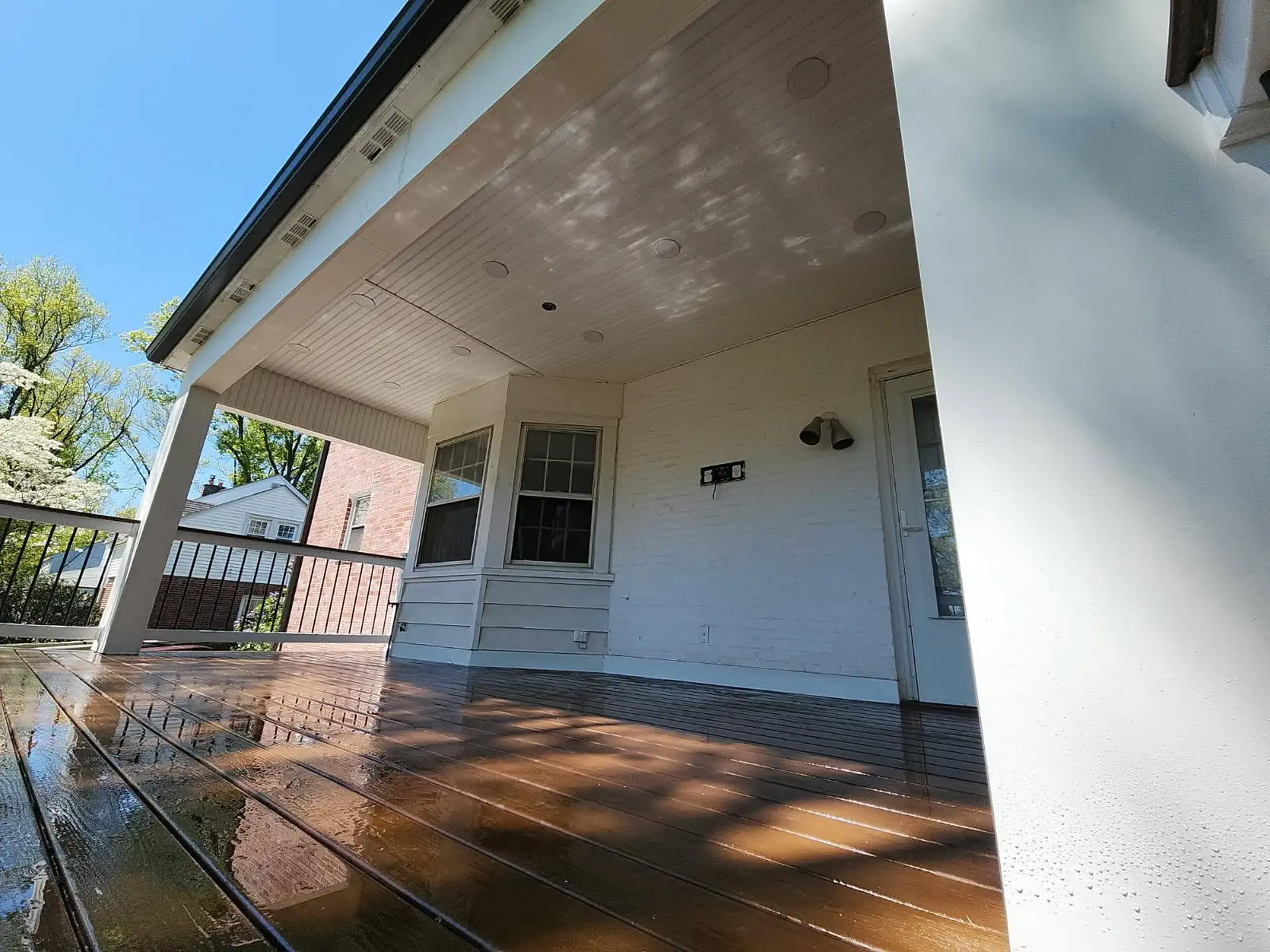
Composite deck owners in Pennsylvania deal with a climate that does not go easy on outdoor surfaces.
Ice and road salt in January. Heavy pollen in April. Afternoon thunderstorms in July. Leaves are piling up against the fascia boards in October.
A deck that looks clean in one season can show black streaks, mold patches, and board staining by the next if the care between those seasons is missing. This guide walks through composite deck maintenance across all four PA seasons, what to do yourself, when to call a pro, and which products to avoid to avoid voiding your manufacturer’s warranty.
If you are still deciding on materials, see what goes into building a composite deck before committing to a product line.
What Is Composite Deck Maintenance, and Why Does It Differ From Wood?
Composite decking is engineered from wood fiber and recycled plastic, so it does not rot, splinter, or absorb water the way pressure-treated lumber does. But it is not maintenance-free.
- Organic matter collects in board grooves.
- Mold develops when moisture sits on the surface.e
- Certain chemicals, like undiluted bleach or petroleum-based solvents, break down the cap layer that most premium boards rely on.
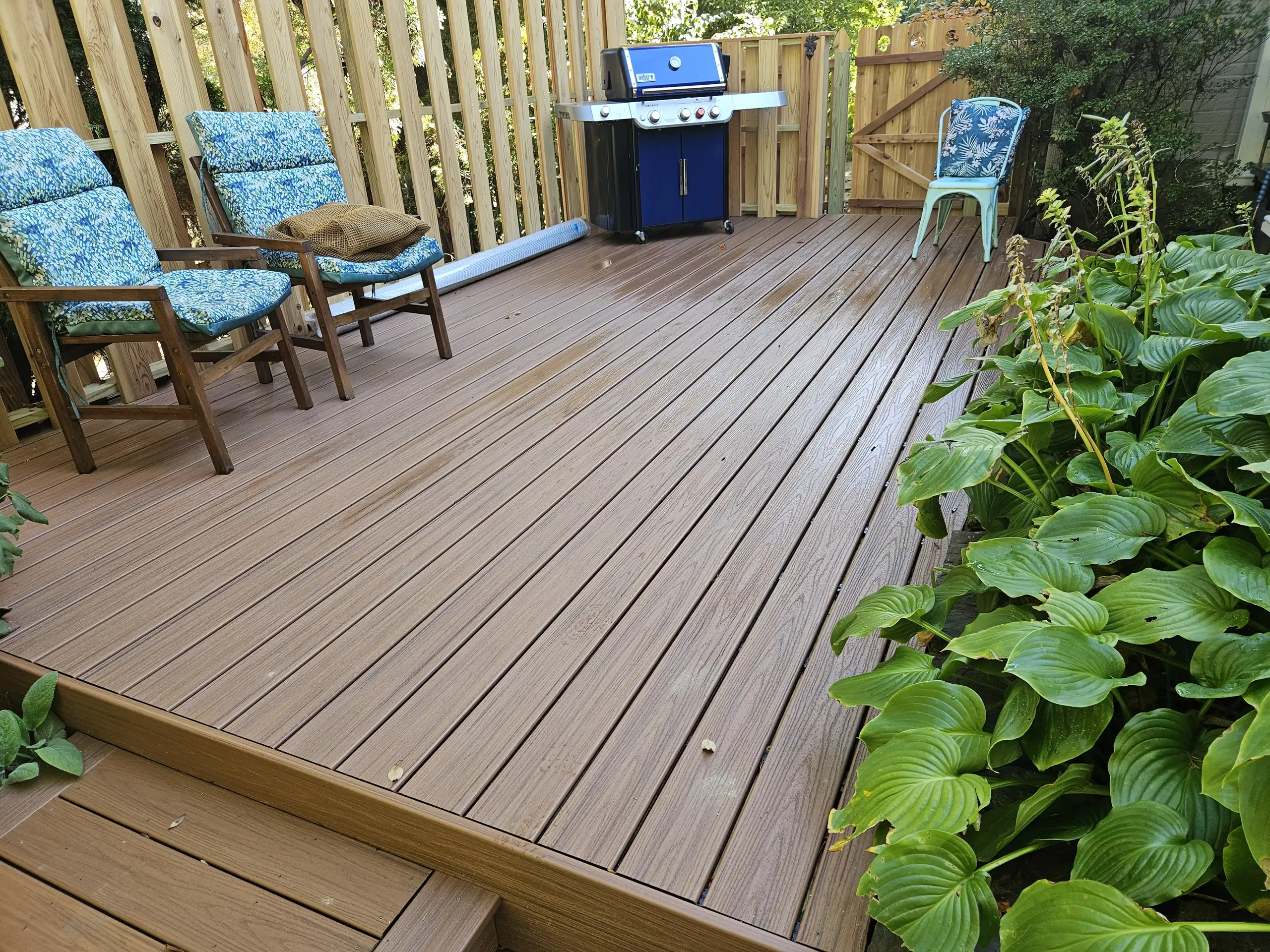
The core difference from wood: Composite deck maintenance is gentler and more frequent. You are not sanding, sealing, or staining. You are sweeping, rinsing, and spot-treating before problems develop.
Brands like Trex and TimberTech publish care guidelines that tie directly to their warranty terms. Knowing those guidelines before something goes wrong is the first step in protecting your investment.
| Maintenance Task | Wood Decking | Composite Decking |
|---|---|---|
| Annual sealing or staining | Required | Not needed |
| Deep cleaning frequency | 1-2x per year | 1x per year (or as needed) |
| Snow removal tool | Plastic or metal shovel | Plastic shovel only |
| Bleach application | Sometimes acceptable | Only if manufacturer-approved |
| Pressure washing | Moderate pressure | Low pressure, wide nozzle only |
| Warranty sensitivity to cleaners | Moderate | High |
Spring and Summer: Building the Composite Deck Maintenance Habit
Spring is when PA decks show what winter left behind. Black streaks, mold patches, loose fasteners. Addressing those in early April is far easier than fighting them mid-summer.
| Task | How Often | Why It Matters |
|---|---|---|
| Sweep boards and gaps | Weekly during pollen and leaf season | Debris in grooves is the primary source of mold on composite surfaces |
| Rinse with hose or pH-neutral soap | Monthly | The backbone of cleaning composite decking is the process that removes pollen and grill residue before they bond to the cap layer. |
| Spot-clean spills with cloth and mild dish soap | Immediately | Composite boards stain faster when warm. Following these composite deck care tips saves a 30-minute scrub later.r |
| Inspect fasteners near posts, stringers, and ledger | Each spring after thaw | Loose fasteners are a safety issue; catching one in April costs far less than a railing failure in August.t |
| Place rubber or felt pads under furniture and planters | Ongoing | Concentrated weight compresses the surface over time, leaving permanent impressions. |
Pro Tip: Set a recurring reminder for the first weekend of each month from April through September. Fifteen minutes of sweeping and a quick rinse keeps composite deck maintenance from turning into a multi-day project.
Fall and Winter: What PA Homeowners Get Wrong
Pennsylvania winters are hard on composite decks, not because of the cold, but because of the cycle.
Moisture gets into gaps, freezes, expands, and thaws. Road salt migrates from shoes onto the surface. Snow sits on boards for days, and homeowners reach for the closest shovel, which often has a metal blade.
These are the exact mistakes that void composite warranties.
| Task | When | What Goes Wrong Without It |
|---|---|---|
| Deep-clean with a composite-safe cleaner and soft-bristled brush | Early October, before first frost | Organic debris and algae bond over winter and stain far deeper by spring |
| Clear gutters and remove leaves from around the deck base | Before first frost | Standing water at post bases is what freeze-thaw cycles weaponize; proper drainage is one of the most critical tips for composite deck care in PA climates. |
| Move cushions, rugs, and lightweight furniture into covered storage | Before first frost | Rugs trap moisture against boards and create the damp conditions where mold starts. |
| Stop road salt and chemical de-icers at the door | All winter | Road salt residue combined with moisture accelerates surface pitting; sand is the safe alternative for traction. |
| Push snow with a plastic-blade shovel only | After every snowfall | Metal blades scratch the cap layer and create micro-grooves where dirt collects, adding cleaning work every season. |
Common Mistake: Reaching for the metal snow shovel because it is closer to the door. Keep a plastic shovel on the deck or next to the back door from November through March.
Deep Cleaning, Stain Removal, and When to Call a Pro
Knowing how to clean composite decking more thoroughly and recognizing when DIY has reached its limit protects the surface and the warranty.
Recognize The Signs That Call For A Deep Clean: These three patterns mean it is time to go beyond a hose rinse:
- Dark streaks along the board grain: Tannin staining from decomposed leaves
- Green discoloration in shaded areas: Algae
- Greasy gray patches near the grill: Bonded cooking oil
| Step | What To Do | What To Avoid |
|---|---|---|
| Cleaner selection | Oxygen-bleach-based cleaners only; Trex deck maintenance and TimberTech guidelines each specify this. | Chlorine-bleach, petroleum-based solvents; wrong cleaners strip the cap layer and can void the warranty |
| Grease stains | Apply a dish soap-based degreaser, let it dwell for 5 to 10 minutes, scrub with a soft-bristled brush along the grain of the board, then rinse thoroughly. | Wire brushes or high-pressure nozzle tips; these damage the cap layer |
| Persistent stains | Stop after two careful attempts and call a professional | Continued scrubbing with stronger chemicals risks permanent damage |
| Ongoing record | Log cleaning dates, products used, and any repairs | N/A |
Planning Tip: Photograph your deck before and after each deep clean. A dated visual record makes it easier to spot slow-developing problems and helps a professional understand what they are walking into.
What the Research Says
Two data points that put composite deck maintenance costs in perspective:
Longer lifespan, better inspections. According to NADRA, decks with documented routine maintenance have significantly longer functional lifespans and are more likely to pass safety inspections. For PA homeowners planning to sell, a maintained deck is an asset rather than a liability flagged during the home inspection.
The cost gap is significant. A 2023 HomeAdvisor cost analysis found that composite deck repairs average $1,500 to $3,000 when problems go unaddressed for more than one season, compared to $150 to $400 for routine cleaning and minor fastener work handled proactively.
Composite Deck Maintenance FAQs
How do I know if my composite deck needs a deep clean or just a rinse?
If sweeping and a hose rinse do not remove the discoloration, it is time for a deep clean. Black streaks, green patches, or gray grease stains that do not lift with water signal that a composite-safe cleaner and a soft-bristled brush are needed.
Can I pressure wash a composite deck, and what settings are safe?
Yes, but with strict limits. Set a fan-tip nozzle at 40 degrees or wider, keep pressure below 1,500 PSI, and hold the wand at least 8 inches from the surface. Test in a low-visibility area first. High pressure or narrow tips can permanently damage the cap layer.
How do I clean composite decking without voiding my warranty?
Start with your decking brand’s published care guide, available on the manufacturer’s website for Trex, TimberTech, Wolf, and most major brands. Oxygen-bleach formulas are generally safe; chlorine-bleach and petroleum-based solvents are not.
What is the right approach to Trex deck maintenance, specifically?
Trex recommends soap and water for routine cleaning and an oxygen-bleach composite deck cleaner for mold, mildew, and embedded stains. Trex explicitly cautions against chlorine bleach, high-pressure nozzles, and abrasive scrubbers.
How often should composite decking be deep-cleaned in Pennsylvania?
Once a year is the minimum, timed for early fall before the first hard frost. Decks under heavy tree cover, adjacent to grills, or in low-sunlight areas may benefit from a second deep clean in mid-spring after pollen season.
Will composite decking fade, and does maintenance slow it down?
UV exposure causes a gradual color shift over time, most visible in the first one to two years before the surface stabilizes—routine cleaning, occasional repositioning of furniture and planters, and avoiding abrasive cleaners all slow visible fading.
Stop Guessing. Start Maintaining.
Sweep in May. Rinse in June. Deep clean in October. Keep a plastic shovel within reach in January.
BTN Decks has been building outdoor living spaces across the Philadelphia area since 1980; 45+ years, 1,500+ decks, and a 3-year labor guarantee on every project.
We install Trex, TimberTech, Wolf, and Deckorators and know the care requirements for each. Contact BTN Decks today for a free estimate.

