
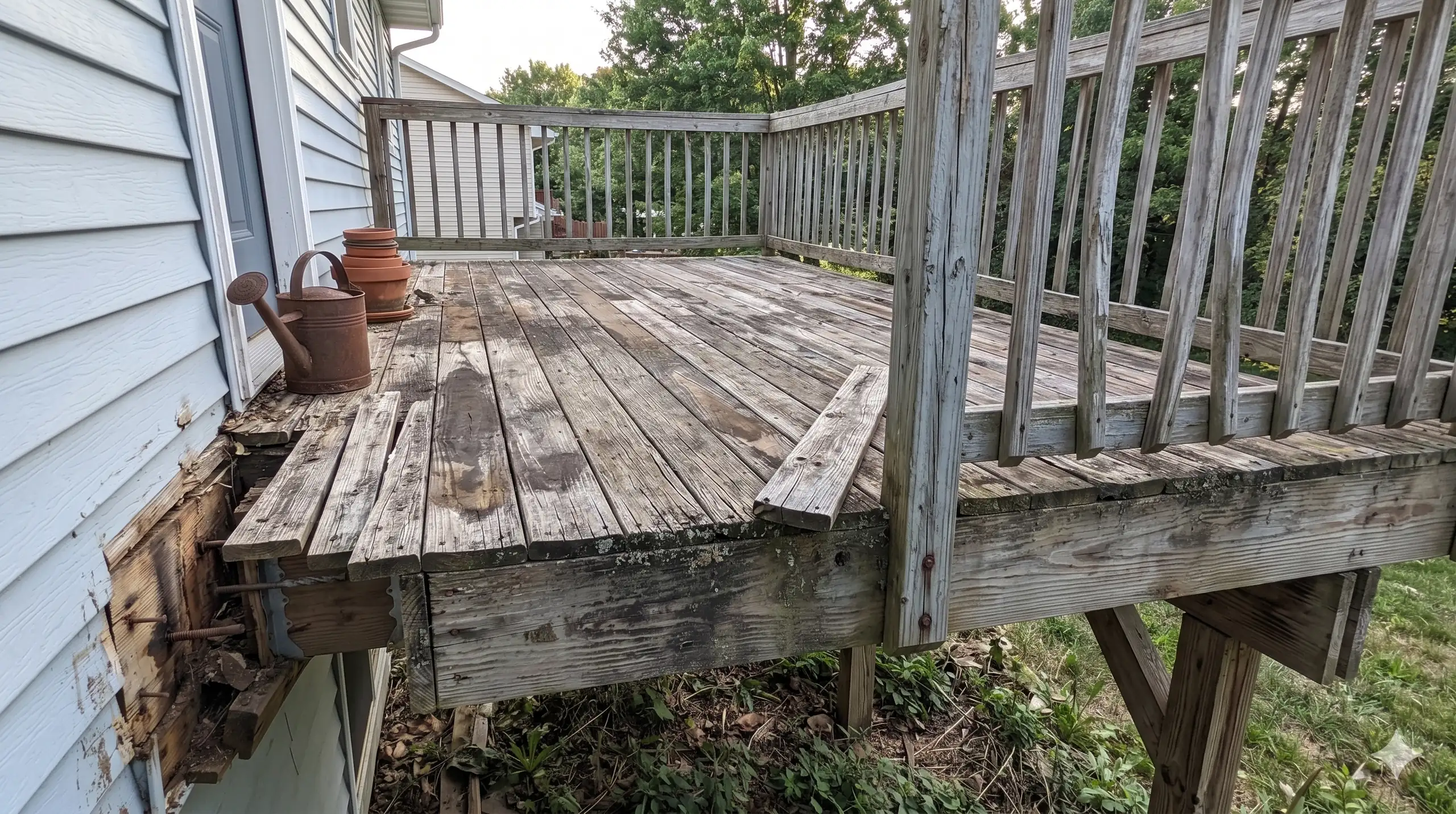
Skim this guide if you want the short answer before comparing contractors. The cheapest deck quote is not always the lowest-cost project. An inexpensive proposal may leave out permitting, structural work, drainage, railings, cleanup, or warranty protection. A fair comparison starts with the complete scope of work, not just the final number.
Most homeowners want a clear number before they commit, so comparing deck quotes is a sensible first step. Back to Nature understands why a lower proposal can look attractive when several contractors appear to offer the same project on paper. That is especially true after weeks of research, several site visits, and more than one late night comparing numbers.
The problem starts when two quotes describe different decks, different preparation, or different responsibilities. A price that looks lower today can quietly create extra decisions, change orders, or repair concerns later. Those costs rarely show up until the project is already underway, making them harder to renegotiate.
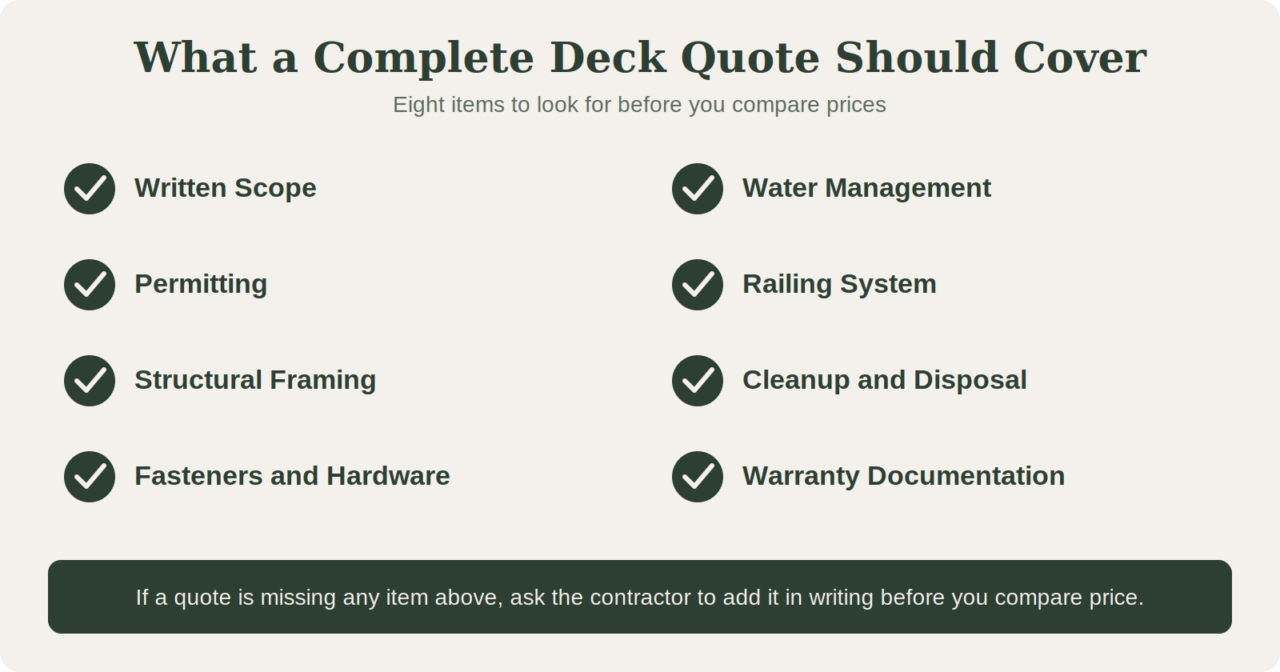
Use this checklist while you read each proposal side by side.
What Should a Complete Deck Quote Include?
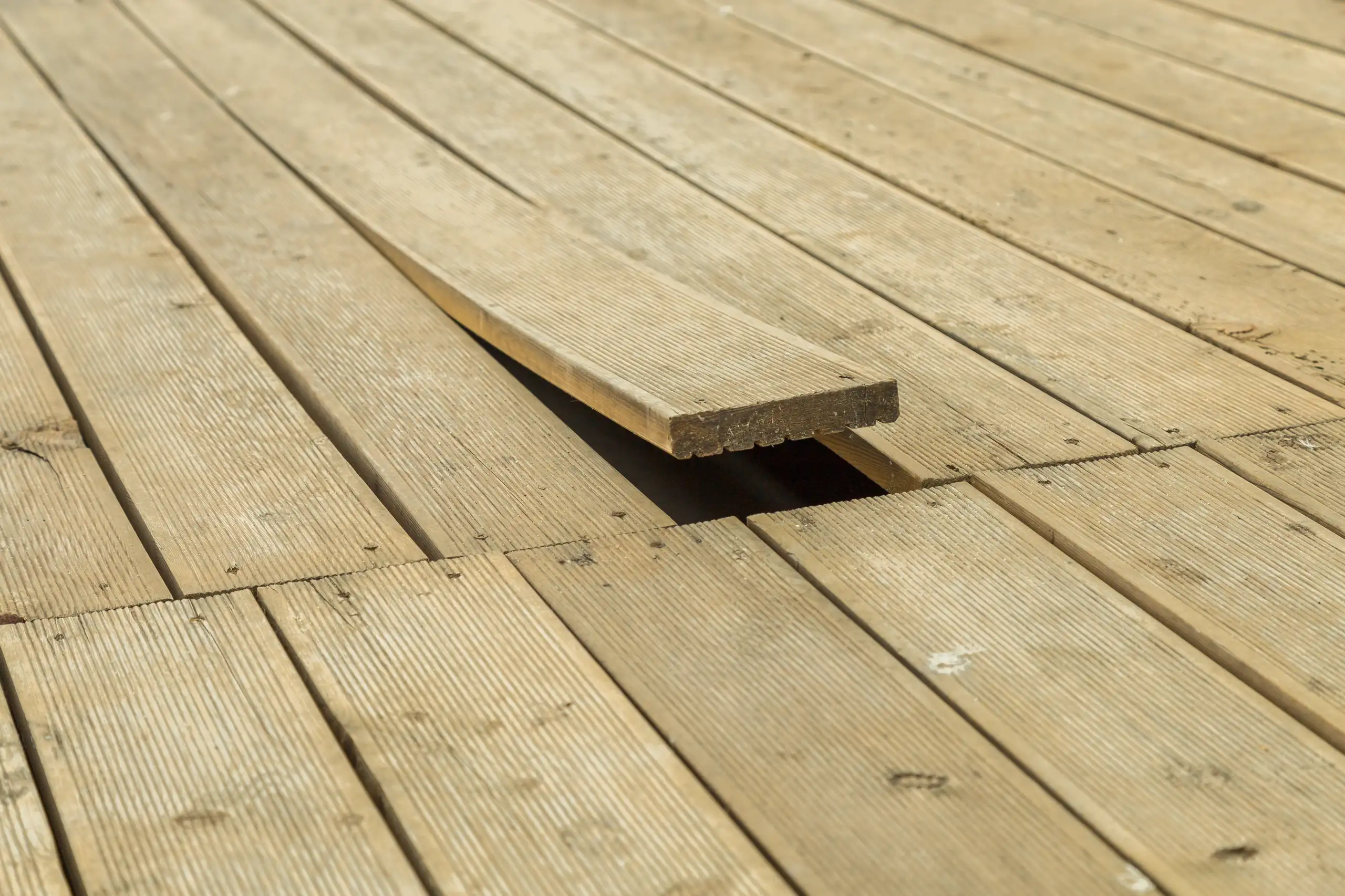
A complete deck quote should explain exactly what the contractor will build, supply, manage, and clean up. The cheapest deck quote can appear attractive when important work remains vague or sits outside the stated deck cost. The goal is to make every line item visible before you sign anything.
- Written Scope: The proposal should clearly identify the deck size, layout, stairs, finishes, and other project features. A detailed scope lets you compare deck pricing based on the same finished result, rather than comparing one broad promise against another. It also gives you something concrete to hold the contractor to later, especially if the finished project ends up looking different from what you pictured.
- Permitting Responsibility: Proper permitting may affect the project budget and schedule, depending on local requirements and the proposed structure. Your quote should state who handles applications, inspections, and related fees. That way, you do not discover an unexpected responsibility or an unexpected delay after work begins.
- Structural Framing: Upgraded framing may cost more than a basic approach, but the framing supports the deck and influences its long-term performance. Ask whether the quote explains the framing system, attachment details, footings, and work needed to address the existing structure. This is the one part of the project that a finished deck will never let you inspect again.
- Fasteners and Connectors: Quality fasteners, connectors, and structural hardware may seem like a small portion of the visible project. They still play an important part in long-term protection. A quote that omits them, or simply lists “standard hardware,” can shift decisions into the field. Changes made there may affect the final cost of the deck.
Pro Tip: Ask each contractor to identify every possible item that could create an additional charge before you sit down to compare the final numbers.
How Can You Compare Deck Quotes Fairly?
You can compare deck quotes fairly by placing every major cost and responsibility side by side. The question of cheap quotes versus long-term value becomes easier to answer when each proposal responds to the same practical questions. These are laid out side by side below, so you can spot a gap in one column at a glance.
| Comparison Point | What To Ask The Contractor |
|---|---|
| Railing Requirements | Does the quote clearly include the railing system, stair components, and any code-related adjustments the project may require? |
| Water Management | How does the proposal address water movement, flashing, grading, and protection of nearby surfaces? |
| Cleanup and Disposal | Does the price include final cleanup, debris removal, disposal of old materials, and restoration of disturbed areas? |
| Allowances and Exclusions | What material allowances, site preparation, repairs, or change-order conditions sit outside the stated price? |
An allowance can make a quote look precise even though the final selection remains undecided. Ask what happens if the actual selection you want costs more than the allowance covers.
Homeowners should ask each contractor to identify what the quote does not include. This step protects your deck budgeting process. It shows whether the lower price reflects a more efficient plan or simply fewer responsibilities in writing. That distinction is worth knowing before you sign.
Homeowner Insight: Two quotes are not truly comparable until they describe the same finished project and assign the same responsibilities.
A Few Red Flags Worth Watching
Some warning signs show up before a single board is ever installed. They often hide inside the cheapest deck quote on the table. Recognizing them early can save you from a difficult conversation mid-project, and most take less than a minute to check for.
| Red Flag | What It Means |
|---|---|
| A Quote With No Line Items | A single total with no breakdown tells you what the project costs, not what it includes. Ask for an itemized version. |
| Vague Material Language | Phrases like “high-end decking” or “standard railing” without a brand, grade, or product name leave room for substitution later. |
| No Written Timeline | A quote without a start date, expected duration, or weather contingency plan makes it harder to hold anyone accountable if the schedule slips. |
| Silence on Warranty Terms | If coverage, duration, and provider are not stated, do not assume they are included. Ask for the terms in writing. |
| Pressure to Decide Immediately | A contractor pushing you to sign before you compare proposals is asking you to skip a protective step. |
Watching for these signs early protects you from a difficult conversation once work is already underway. Ask about each one before you request final deck cost estimates from any contractor.
Is a Lower Deck Cost Worth the Possible Tradeoffs?
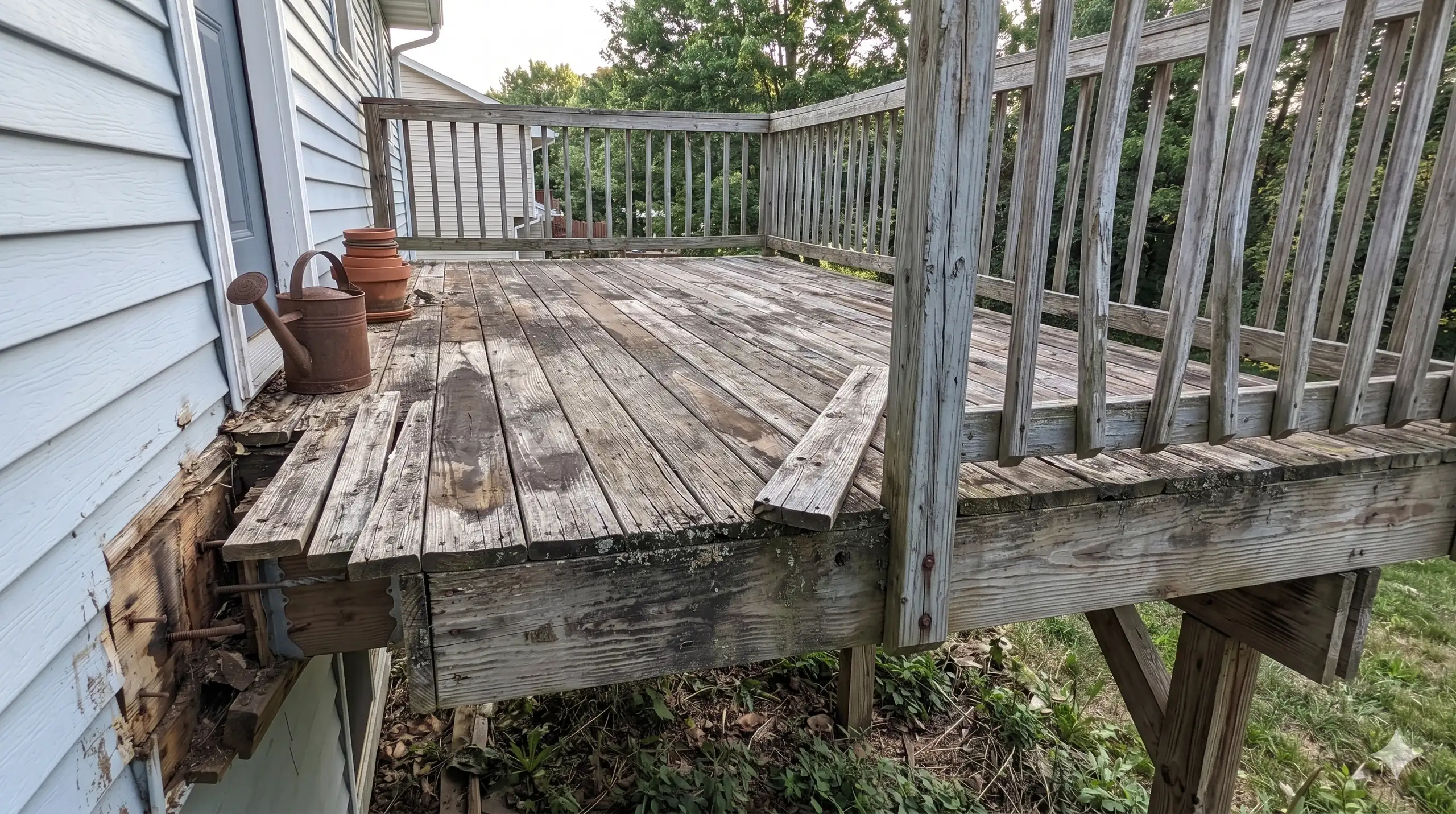
A lower deck cost may be worthwhile when it comes from a simpler design, fewer features, or a material choice that fits your budget. It becomes risky when the savings come from leaving out work that protects the structure, satisfies code, supports maintenance, or defines the finished project. The four factors below are the ones most likely to explain a price gap between two otherwise similar proposals.
- Initial Price: The price must fit your budget, but weigh it against the cost-versus-value picture: durability, usability, appearance, and protection.
- Material Selection: Compare the product, installation details, upkeep expectations, and intended use, not just the price tag.
- Protection and Documentation: Confirm what is covered, who provides it, and get it in writing. See Back to Nature’s own warranties and guarantees page for reference.
- Long-Term Fit: Weigh traffic, furniture, stairs, shade, access, maintenance preferences, and future changes before choosing.
None of these four factors decides the outcome on its own. A quote that wins on price but loses on warranty documentation is not automatically the better deal. The same is true of a quote that wins on material but ignores how your household uses the space.
Homeowners do not need to automatically choose the highest quote, and a higher price does not guarantee a better result on its own. The strongest decision comes from matching the scope, materials, preparation, protections, and contractor responsibilities to the outcome you want.
Cheapest Deck Quote FAQs
Why can two deck quotes for the same property differ so much?
Two proposals may use different materials, structural approaches, layouts, preparation requirements, or assumptions about permitting and cleanup work. The final difference often reflects the scope of work rather than a simple difference in contractor markup. A side-by-side, line-item comparison matters more than the bottom-line number.
Can I lower my deck cost without accepting the lowest quote?
You may reduce deck cost by simplifying the layout, adjusting the size, or choosing a different material tier. This does not mean giving up the parts of the scope that protect the structure. Ask each contractor which specific changes reduce cost and what tradeoff, if any, comes with each one.
What should I provide when requesting deck cost estimates?
Useful information includes the approximate location, desired size, preferred access points, existing deck conditions, stairs, railing needs, and material preferences. Photos and basic measurements can help a contractor understand the project scope, but an accurate estimate may still require a closer review of the site. The more detail you provide up front, the fewer surprises show up once work begins.
How should I review a quote with unclear exclusions?
Ask the contractor to identify every excluded item in writing and explain whether it could affect the completed project. You should understand responsibilities for permits, inspections, site preparation, disposal, repairs, selections, and changes before approving the proposal. If a contractor cannot answer clearly, treat that hesitation as information in itself.
Back to Nature and the Cheapest Deck Quote
The cheapest deck quote deserves a careful comparison before you accept it, especially when the proposal leaves room for assumptions. Keep the checklist near the top of this guide handy while you review each proposal line by line. Back to Nature can help you review project details, understand the factors affecting deck pricing, and identify the information needed for an accurate estimate. When you are ready to compare your options with a full written scope, reach out. You can request an estimate and talk through your deck plans with our team.

